
- Bar / Barrier Seals
- Bolt Seals
- Cable Seals
- Pull Tight Cable Seal 17″ (5/64″ / 1.8mm) PTSEAL (17″)
- Pull Tight Cable Seal 39″ (5/64″ / 1.8mm) PTSEAL (39″)
- Pull Tight Cable Seal – Model JoeGuard Series 12″
- Pull Tight Cable Seal – Model JoeGuard Series 39″
- Pull Tight Cable Seal – Model JoeGuard Series 58″
- Pull Tight Cable Seal – Model JoeGuard 78″
- Plastic Seals
- Tin Seals
- Meter Seals
- Tamper-Proof Labels
- Trailer Seals


HS Code 8309.90.0000 Explained: Customs Classification for Metal Security Seals

Customs Classification Guide
HS Code 8309.90.0000 Explained: Customs Classification for Metal Security Seals
A plain-English guide to what 8309.90.0000 covers, the U.S. import duty rate, and how it applies to bolt, cable, bar and metal band seals.
By American Seals | Updated May 28, 2026 | 9 min read
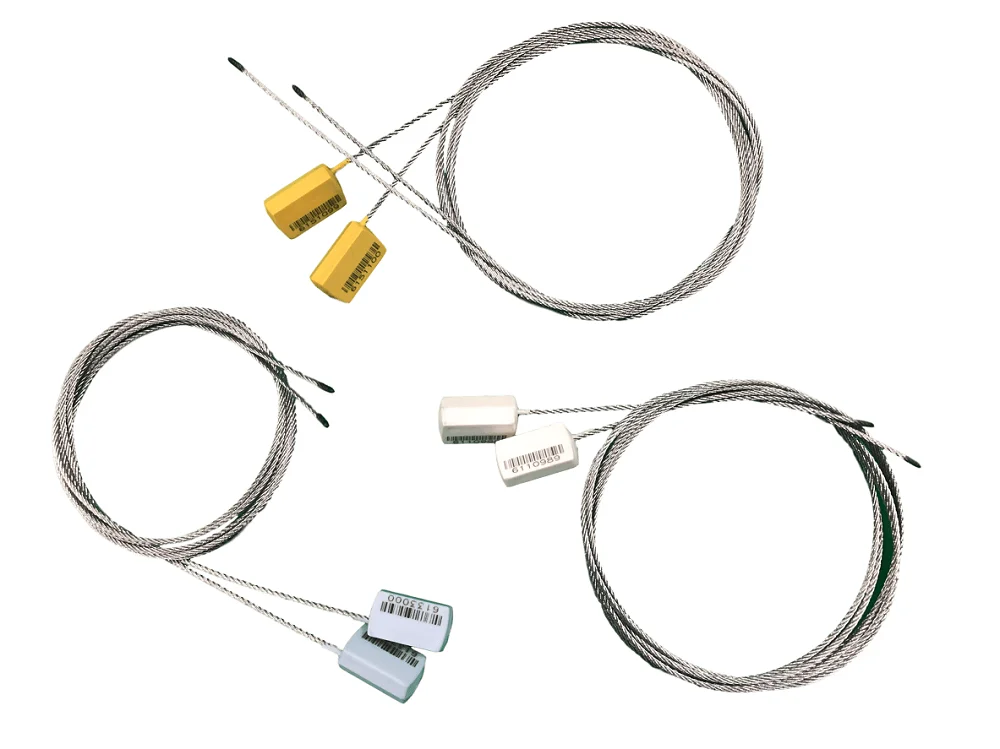
HS code 8309.90.0000 classifies seals and packing accessories of base metal under Chapter 83 of the tariff schedule.
If you import or export security seals, one number shows up again and again on your commercial invoices and customs paperwork: HS code 8309.90.0000. This ten-digit tariff classification covers metal seals, caps, lids and other packing accessories of base metal — the exact family of products that keeps shipping containers, trucks, railcars and trailers tamper-evident. Getting this code right protects you from customs delays, penalties and incorrect duty assessments.
In this guide we break down what 8309.90.0000 actually means, which products belong under it, how the U.S. duty rate works, and how it differs from related codes. Whether you are a logistics manager, importer or procurement lead, you will leave knowing exactly how your seals should be classified.
HS Code 8309.90.0000 — Key Facts
| Full code | 8309.90.0000 (HTSUS, 10-digit) |
| Chapter 83 | Miscellaneous articles of base metal |
| Heading 8309 | Stoppers, caps, lids, seals & packing accessories of base metal |
| Subheading 8309.90 | “Other” — everything except crown corks |
| U.S. general duty | Free (Column 1, general rate) |
| Typical products | Bolt seals, cable seals, bar seals, metal band seals |
What Is HS Code 8309.90.0000?
The Harmonized System (HS) is a standardized numbering method used by more than 200 countries to classify traded goods. In the United States, that system is extended into the Harmonized Tariff Schedule of the United States (HTSUS), which adds extra digits for duty and statistical purposes.
The official HTSUS description for this line reads: “Stoppers, caps and lids (including crown corks, screw caps and pouring stoppers), capsules for bottles, threaded bungs, bung covers, seals and other packing accessories, and parts thereof, of base metal: Other.” In other words, 8309.90.0000 is the catch-all classification for metal closures and seals that are not crown corks.
Because metal security seals are manufactured from base metals — carbon steel, galvanized steel, aluminum and tin — and function as tamper-evident packing accessories, they fit squarely within this heading.
Breaking Down the Digits
A tariff number is not random — each segment narrows the classification. Here is how 8309.90.0000 is built:
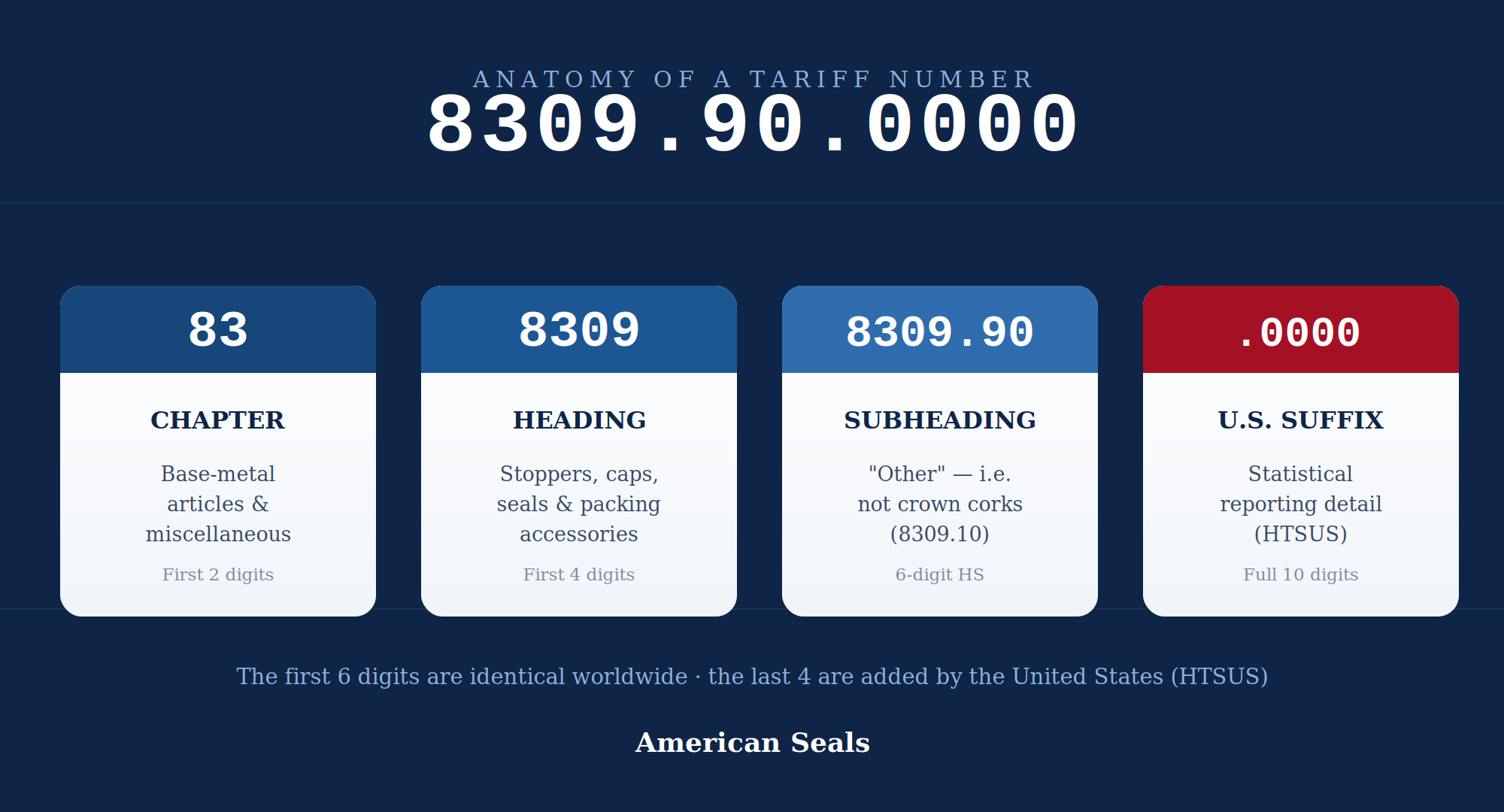
The first six digits (8309.90) are used worldwide; the United States adds the final four digits.
The key takeaway: the first six digits are identical in every HS country, so your overseas suppliers and buyers will recognize 8309.90. The final four digits (the .0000 statistical suffix) are specific to the U.S. HTSUS and are used by U.S. Customs and Border Protection for reporting.
What Products Fall Under 8309.90.0000?
Most metal security seals are classified here. The exact suffix can vary by ruling and material, but the heading 8309.90 is the natural home for the tamper-evident seals below.
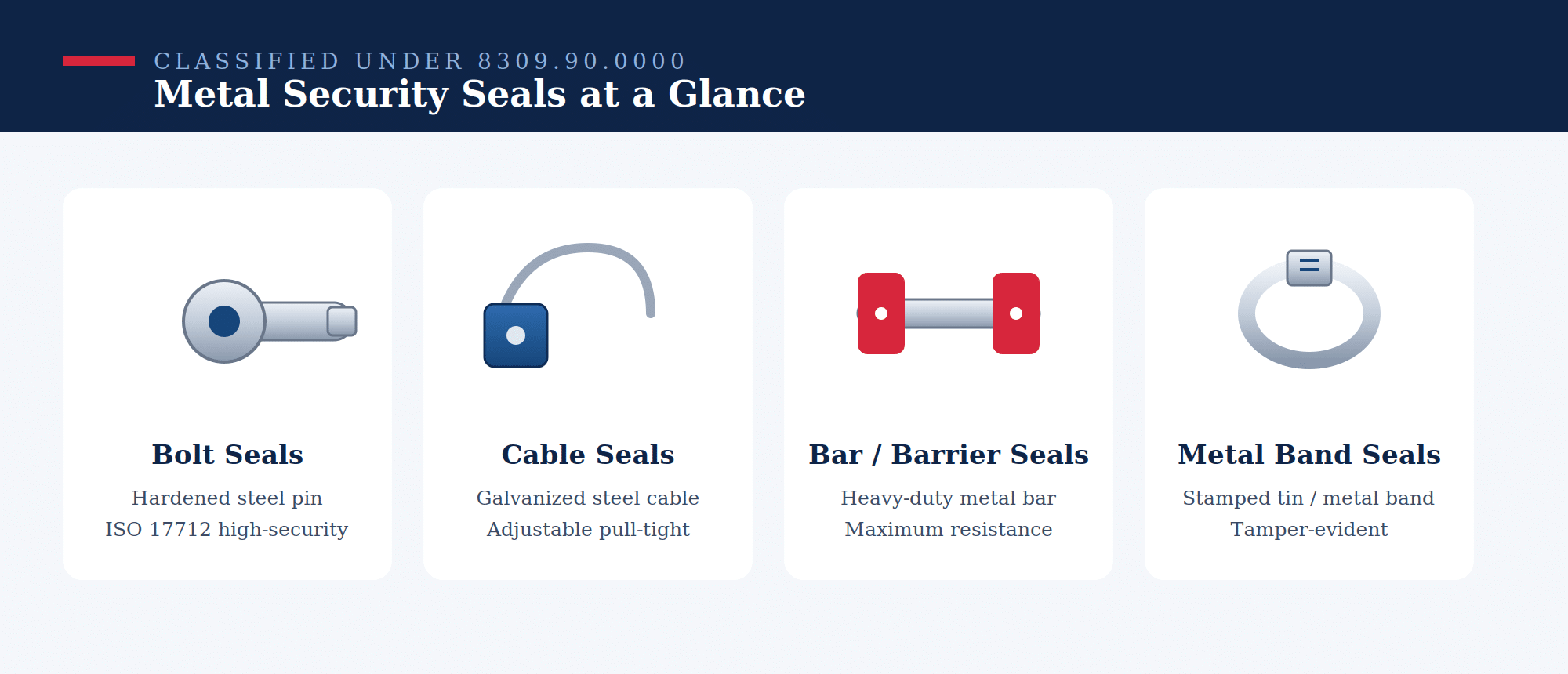
Common metal security seal types that fall under HS heading 8309.90.
| Product type | Primary material | Browse the product |
|---|---|---|
| Bolt seals — hardened steel pin, ISO 17712 high-security | Carbon / hardened steel | QueenSeal Bolt Seal |
| Cable seals — adjustable pull-tight, laser engraved | Galvanized steel cable + aluminum housing | JoeGuard Cable Seal 58″ · JoeGuard 78″ |
| Bar / barrier seals — heavy-duty, maximum resistance | Steel bar with metal locks | Seaforce®1 Bar Seal |
| Metal band / tin seals — stamped, tamper-evident | Tin / sheet metal band | MBS-8001 Metal Band Seal |
You can see the full range — including custom serial numbering and laser engraving options — on the American Seals product shop.
Important: Not every seal belongs under 8309.90. Plastic pull-tight seals such as the CrabSeal are made of polymer, not base metal, so they are generally classified under heading 3923 (plastics) rather than 8309. Classification follows the material that gives the article its essential character.
U.S. Import Duty Rate for 8309.90.0000
The general (Column 1) duty rate for 8309.90.0000 is Free. That means goods imported from countries with Normal Trade Relations status are not subject to a base ad valorem duty under this tariff line.
However, “Free” in the base schedule does not always mean zero total cost. Depending on the seal’s material and country of origin, additional trade-remedy measures — such as Section 232 tariffs on steel and aluminum and their derivative products, antidumping/countervailing duties, or other special tariffs — may add to the landed cost. These programs change frequently, so always confirm the current applicable rate with U.S. Customs and Border Protection or a licensed customs broker before you file.
HS vs HTS vs HTSUS: Why the Code Has Ten Digits
These acronyms get used interchangeably, but they describe different levels of detail:
HS (Harmonized System)
The international six-digit standard maintained by the World Customs Organization — in our case, 8309.90. Every member country recognizes these six digits.
HTS / HTSUS (Harmonized Tariff Schedule of the United States)
The U.S. version that adds digits seven through ten for duty rates and statistical tracking, producing the full 8309.90.0000. Exporters in other countries may use a different national suffix on the same 8309.90 base.
Why Correct Classification Matters
Misclassifying your seals — even with a “Free” duty line — can still create real problems:
Customs delays: An inconsistent or incorrect code can flag a shipment for review and hold your containers at port. Penalties: CBP can assess penalties for inaccurate entries, regardless of whether duty was owed. Audit exposure: Reasonable care is a legal obligation for importers; documented, consistent classification demonstrates compliance. Supply-chain trust: Accurate paperwork keeps your C-TPAT and ISO 17712 compliance story clean for partners and auditors.
Source High-Security Metal Seals That Ship Worldwide
American Seals has manufactured ISO 17712 and C-TPAT-ready security seals for over 30 years — with free company name engraving and consecutive numbering.
Frequently Asked Questions
What does HS code 8309.90.0000 cover?
It covers stoppers, caps and lids (other than crown corks), capsules for bottles, threaded bungs, bung covers, seals and other packing accessories, and parts thereof, of base metal. Metal security seals — bolt seals, cable seals, bar seals and metal band seals — are commonly classified under this code.
What is the U.S. import duty rate for 8309.90.0000?
The general (Column 1) duty rate is Free. Additional measures such as Section 232 tariffs on steel and aluminum, or other trade-remedy duties, may still apply depending on material and country of origin. Verify current rates with CBP or a licensed customs broker.
Are plastic seals classified under 8309.90.0000?
No. Heading 8309 applies to articles of base metal. Plastic closures and seals are generally classified under heading 3923 (for example, 3923.50 for stoppers, lids, caps and other closures of plastics).
What is the difference between 8309.10 and 8309.90?
Subheading 8309.10 covers crown corks (including crown seals and caps). Subheading 8309.90 is the “Other” category — the remaining metal seals, caps, capsules and packing accessories that are not crown corks.
Do I still need to classify correctly if the duty is Free?
Yes. Importers have a legal duty of reasonable care. An incorrect code can trigger shipment holds, penalties and audit exposure even when no duty is owed.
Disclaimer: This article is for general informational purposes only and does not constitute customs, legal or tariff advice. Tariff classifications and duty rates change and depend on the specific characteristics of your product and shipment. Always confirm the correct classification and current duty rate with U.S. Customs and Border Protection or a licensed customs broker before filing.